Monday, May 5, 2008

Foreclosures up 112%

Foreclosures being up, doesn't necessarily constitute a poor real estate market. Dallas is still enjoying a steady market. Not as good as it has been as there are fewer buyers to go around. Buyers also get to choose homes from this foreclosure market, however, most foreclosure homes are a big turnoff to todays picky buyer.

From CNN

NEW YORK (CNNMoney.com) -- Foreclosure filings in the first three months of 2008 rose more than 112% over last year, according to a study released Tuesday.
Real estate information firm RealtyTrac reported that nearly 650,000 foreclosure filings - which include notices of default, auction sales and bank repossessions - were issued in the first quarter. That represents 1 of every 194 households and marks a 23% increase from the last quarter of 2007.
Housing bust: Tell us your story
So far this year 156,463 families have lost their homes to repossessions.
"Foreclosure activity hasn't slowed down yet," said Rick Sharga, spokesman for RealtyTrac. "But I was a little surprised that foreclosure filings more than doubled since last year."
Foreclosures increased in 46 states and in 90 of the nation's 100 largest metro areas. Some regions that had been only marginally hurt by the mortgage meltdown recorded large increases in filings. In Connecticut, for instance, filings tripled compared with the first three months of 2007. Massachusetts recorded a 260% increase.
Nevada: Hardest hit
The worst hit states are still clustered in the Southwest; Nevada, California and Arizona lead the nation in foreclosure filings. Prices ran up rapidly in these areas during the bubble years as speculators snapped up single-family homes and condos as investments.
In the first quarter, 1 of every 54 homes in Nevada received some type of foreclosure filing - more than any other state. Its largest city, Las Vegas, had 1 out of every 44 homes go into foreclosure.
Stockton, Calif., had the highest foreclosure rate out of any U.S. metro area, with 1 out of every 30 homes receiving a notice - nearly seven times higher than the national average. The Riverside/San Bernardino region had the second highest rate in the quarter, with one of every 38 homes in default.
Only two metro areas in the ranks of the 20 hardest hit were outside the Sunbelt - Detroit, which ranked sixth in the nation with 1 in every 68 households in default, and Cleveland which saw 1 in every 105 homes go into foreclosure.
The news comes despite increased foreclosure prevention efforts by lenders and community organizations. Hope Now, the coalition of mortgage lenders, servicers investors and community groups, announced Monday that it helped over a half a million home owners avoid foreclosure during the first three months of the year.
And some local governments have stepped up their programs to help borrowers, according to RealtyTrac CEO James Saccacio.
"For example, in late March Philadelphia issued a temporary moratorium on all foreclosure auctions for April," he said. "The city has since adopted a program that will delay foreclosure proceedings on owner-occupied properties until the owners have met face-to-face with lenders to attempt to create a loan workout plan that would prevent foreclosure."
More trouble ahead
Additionally, lawmakers in Washington, D.C. are at work on several plans that would deliver foreclosure relief to distressed borrowers.
All of these foreclosure prevention efforts may not be able to stand up to the tsunami of foreclosures on the way. Sharga says that a record number of hybrid adjustable rate mortgages (ARMs) - worth $362 billion - will reset in 2008.
These so-called "exploding ARMs" usually have low introductory interest rates that reset much higher after two or three years, and then re-adjust as often as every six months after that. Unless these loans can be reworked, many will fail.
"We expect to see another foreclosure peak in the late third or fourth quarter of the year," said Sharga, "because of the record number of resets coming."

Thursday, May 1, 2008

March housing activity report

NTREIS MLS Area Housing Activity ReportCompiled for North Texas Real Estate Information System
Current Month Summary for: March 2008


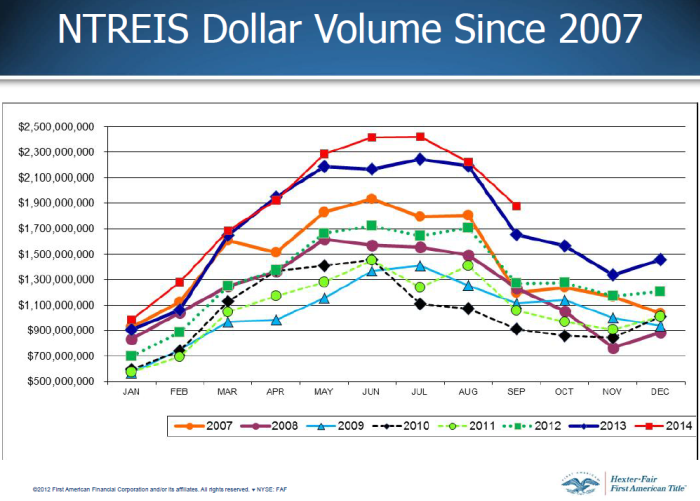
Click above link to see this last months reports regarding area housing activity. Home sales are down 25% from this time one year ago. However, the median price of homes has risen 2%.

To get you home sold successfully, you will need to have your home priced correctly and marketed effectively. Call me if you have any questions. J.J. Chapa 972-254-2011, www.JJChapa.com .

Tuesday, April 29, 2008

Process for buying a HUD foreclosure

Who doesn’t love a bargain? For the thrifty capitalist, investing in HUD foreclosures—residential properties owned by the U.S. Department of Housing and Urban Development—appears to be exactly that. Furthermore, the possibility that HUD foreclosure homes might become increasingly available in the coming years should pique renewed interest among investors; however, investors should be aware of limitations in the process of purchasing HUD foreclosures that may or may not fit their personal aims for the investment.

A HUD foreclosure, or HUD home, is a single family or multi-family residential property acquired by HUD as a result of a foreclosure action on an FHA-insured mortgage, according to hud.gov. In the wake of the subprime lending crisis, FHA-insured mortgage loans are becoming more popular among homebuyers who experience difficulty in qualifying for traditional bank loans. An increase in the number of FHA-insured loans distributed to homebuyers is likely to be accompanied by an eventual increase in HUD foreclosures. As a result, investors could stand to reap high profit margins resulting from the affordability and availability of HUD homes on the market.

Most HUD properties are hardly dream homes, however, and are almost never found in high-cost urban areas. FHA-insured mortgages for properties in high-cost areas such as New York and Los Angeles must not exceed a maximum loan limit of $362,790, according the FHA.com—a prohibitively low amount when compared to the actual selling prices of most homes in those areas. Furthermore, all HUD homes are sold as is, and selling prices are discounted based on the extent of repairs and renovations that need to be done.

The process of buying a HUD foreclosure is significantly different than that of purchasing a traditional home. HUD homes are sold through a bidding process that puts investors in line behind intended owner-occupants. During the first 10 days that a HUD home is listed for sale, only owner-occupants are permitted to place bids; if a successful bid is not accepted by the time the initial priority period has elapsed, bidding is opened to investors as well.

HUD homes for sale are posted on Internet listing sites by special HUD-contracted management companies. Bids for HUD homes must be placed through a HUD-registered broker or agent and are usually submitted electronically.

In addition, HUD will pay for some closing and sales commission costs. According to Harrington, Moran and Barksdale, Inc. (HBMI), a company that markets and manages HUD single family homes for several states, HUD will pay up to 5 percent for broker commission costs and up to 3 percent for standard closing items, excluding the closing agent fee. HUD will pay the entire closing agent fee if buyers use HUD closing agents; conversely, buyers who choose to use a non-HUD agent must pay the fees and work with a HUD agent on some legal items.

Although HUD will pay broker commissions and other closing costs, the amount that HUD has to pay is subtracted from the net worth of the bid. Therefore, a bid offer that includes a broker commission of 2 percent would be viewed as more favorable than the same bid amount that includes a 5 percent commission.

Consumers must provide an earnest money deposit to their real estate broker by the time of electronic bidding; deposits can be as low as $500 for properties selling for less than $50,000, according to ForeclosuresToGo.com. Earnest money deposits for winning bids are immediately submitted to the HUD closing agent.

Once a bid is won, the purchaser must close within a time period specified by the closing agent and the correct sales contract must be submitted quickly—within 48 hours for most states. A strict settlement deadline is set, usually 30 to 60 days from the date of the accepted contract.
Investing in HUD foreclosures offers affordability and potential for good returns, but investors, as always, should do their research and exercise patience when dealing with a bidding process that generally caters to owner-occupant buyers. For more information on purchasing HUD homes and internet listing sites, email J.J. at JJ@JJChapa.com .

Monday, April 28, 2008

The Value of Successful Home Staging

The Value of Successful Home Staging
by Debra Allen
Have you ever walked into a beautifully decorated model home and been captivated by it? Did you find yourself dreaming of bathing in that spa-like bathroom, cooking meals in the gourmet kitchen or curling up with a book in that luxurious reading nook? If so, then you have been the successful target of the secret weapon called staging.

As a real estate agent, you know that staging your real estate listings will result in a faster and more profitable sale, but who can you trust to manage this important process for you.
You want the best possible price for your home, but do not want to pay more than your return to achieve this. You need expert and objective home staging guidance that comes from experience and a highly trained eye in order to compete in a buyers market. What you seek is the experience of an Accredited Staging ProfessionalTM (ASPTM).
Staging can entail simple tasks like removing clutter. Clutter eats equity. Stagers aren't maids or house-cleaners; they don't do repairs or paint. Rather they create a neutral, harmonious, spacious, and beautiful environment. They often set tables for dinner so that a prospective buyer can envision themselves in the property having a family dinner.
Think of staging like detailing a car. A smart auto seller would detail a car before selling it to add value. That's precisely what staging can do for a house. As a REALTOR®, I think that staging helps; it makes the property stand out. In turn, good staging can determine which properties sell fast and which do not. It is no longer a market where staging helps the property sell for more. In today's market, it enables the property to have more potential of selling at all. It's a buyer's market, so make your home stand out by creating a sophisticated ambiance.
While some sellers may be hesitant to spend more money on staging in a down market, this is the winning way to get a property sold; and often for a higher asking price.
Professional stagers can see your house as buyers will, and they'll set the scene so that buyers can imagine living there. They're likely to simplify or streamline the furniture in a room for better traffic flow and to enhance its spaciousness. They may neutralize a too-personal color scheme or add touches of color or accessories where needed. In vacant homes that feel cold and lack visual landmarks, stagers often bring in rental furniture to create warmth. This helps Buyers mentally move in and feel that when it's time for them to move in, thy will be able to kick back and relax.
REALTORS® and sellers can hire stagers by the hour or the room. Homeowners typically pay from $200 to $3,000 depending on the level of service required. But the pay-off in time saved and higher sales price can be nice. If all your listings looked like model homes, do you think you'd have an easier time selling them? And do you think they might command a higher selling price? Statistics show this to be true.
Buying a house is largely an emotional decision because people are not just purchasing a home; they are buying a dream ... a lifestyle. If you can help them with their vision so they don't have to rely completely on their imagination, you positively impact how they feel in the home, which will be reflected in the sales price and number of offers you receive. All human beings want comfort, excitement, prestige and love, and all these are at work in the psychology of the home purchase. Effective staging maximizes those feelings, creating an atmosphere that makes people want to linger and imagine themselves living in the space. Ultimately, staging creates a home the prospective buyer will not be able to live without.
People today have busy lives, they want to walk in and look at a home and say, "This is mine. I can move into this home without doing anything."
Published: February 27, 2008

Born in Bremen, Germany, Debra Allen brings a unique international perspective to the Arizona real estate market.
In just three years with Prudential Arizona Properties, one of the fastest growing real estate firms in the U.S., Debra has distinguished herself from the pack. An outstanding professional, Debra is committed to attaining the highest levels of education and real estate specific training. Her industry designations include the following: ABR (Accredited Buyer Representative), GRI (Graduate, Real Estate Institute), ASP (Accredited Staging Professional), Relocation Specialist, and the e-Pro (Internet Real Estate Professional) designation awarded by the National Association of Realtors®.
Her access to professionals around the world has led Debra to be a Multi Million Dollar Producer since 2004, averaging $3.8 million in sales annually and anticipating lucrative business opportunities in a shifting market. Prudential Arizona Properties recognizes that it has a "winner" in Debra. As such, the company recently awarded Debra for her sales performance and client service in 2006.

Saturday, April 19, 2008

Average Joe Still Can't Afford a House

Article attributed to Bankrate.com

Between 2000 and mid-2007, the median home price soared 64.9% to $229,200. The median income, meantime, rose just 16.6%. For would-be buyers, the math doesn't work.
One of the worst things about today's real estate market is that there doesn't seem to be any silver lining in that big black cloud.
Normally, you'd think dramatically falling prices would make homeownership possible for more moderate-income families.
But even with homes more affordable, the median price in many markets is still out of reach for a median-income family, according to "Paycheck to Paycheck: Wages and the Cost of Housing in America," a study by the Center for Housing Policy, or CHP, in Washington, D.C.
Comparing housing costs in 210 metropolitan areas with the wages earned by workers in 60 occupations, the study found that homeownership is often unaffordable for workers in each of the five-fastest growing occupations -- registered nurses, retail salespeople, customer-service representatives, food-preparation workers and office clerks. Registered nurses, who typically have high salaries, were unable to purchase a median-priced home in 108 of the markets.
"Even with the housing downturn, the drop in prices still just isn't enough for many workers in traditional backbone occupations to afford houses," says Rebecca Cohen, a CHP research associate.
In many parts of the country, housing increases have outpaced wage growth for almost a decade. Census data released in 2006 revealed that between 2000 and 2005, the burden of housing costs grew sharply.
The Housing Affordability Index measures the cost of housing against median family income. The National Association of Realtors, or NAR, which calculates the index, considers that the typical family makes enough money to buy the typical used home, assuming a 20% down payment and a traditional 30-year mortgage.
In 2000, the NAR pegged the index at 129.2, meaning the typical family had 129% of the income necessary to pay for the typical used house. That figure dropped to 104.9 in June 2007, even though the 2000 median family income of $50,732 rose to $59,157 during the period.
That's because the median price of a home in 2000 was $139,000, but by June 2007 prices peaked at a whopping $229,200. In those seven years, the median price of homes increased 64.9%, while median incomes rose just 16.6%.

Friday, April 18, 2008

Todays Dallas Morning news

According to NTREIS, the downtown continues to spread with home sale prices continuing to slump.

Additionally, the foreclosure outbreak is beginning to affect higher end homes.

Links to article click here

Thursday, April 10, 2008

9 Tips on Buying a Home

Please view this helpful home buyer video.